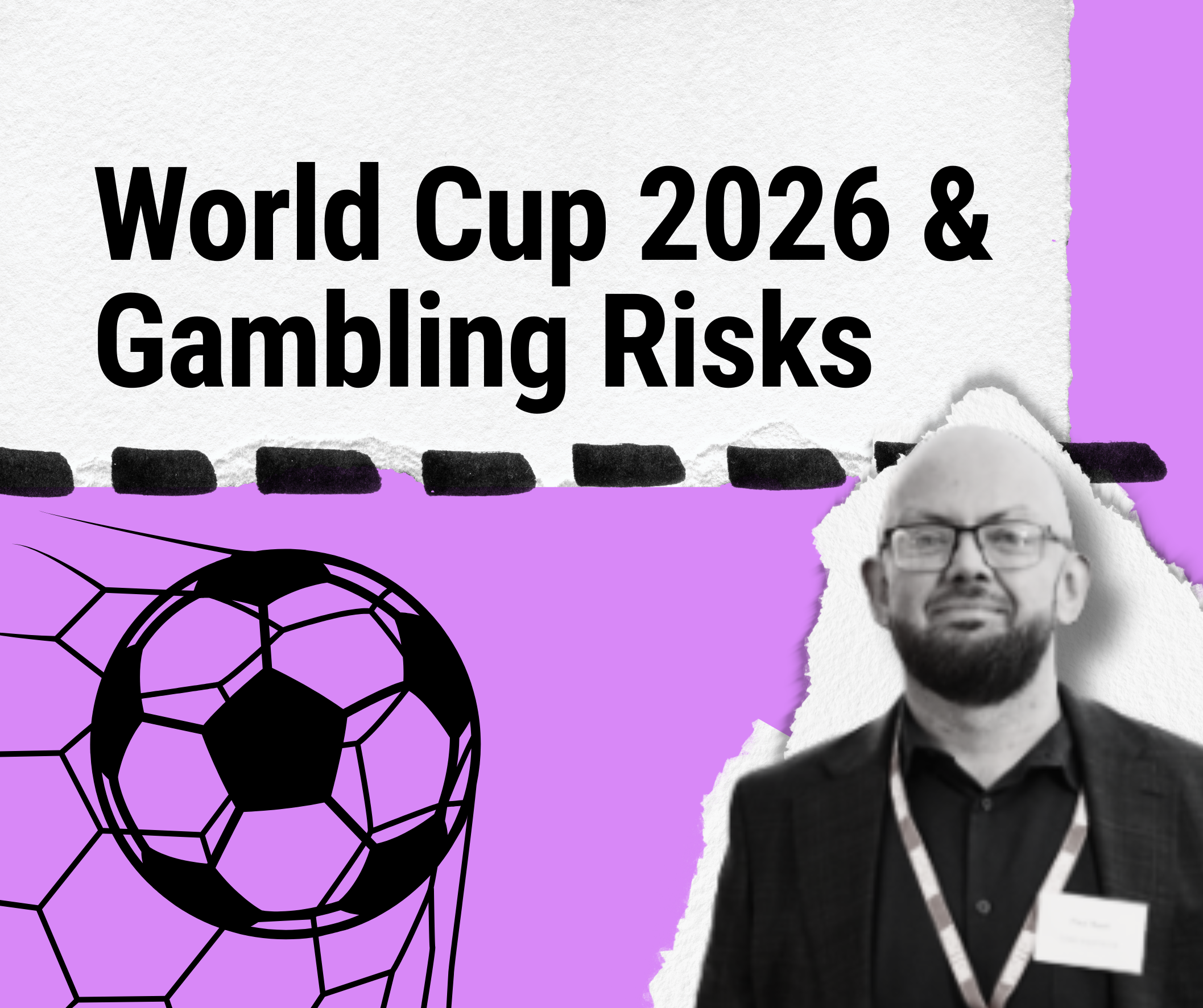
The men’s football World Cup is now in full swing, and new research has highlighted concerns that major sporting events could encourage increased gambling among young adults, potentially placing additional pressure on those already facing financial challenges.
A study commissioned by Nationwide found that 83% of gamblers aged 18 to 24 expect to gamble more frequently during major sporting events in 2026, including the World Cup. This compares with 37% of gamblers aged over 55, revealing a significant generational divide in betting behaviour.
We caught up with lifelong sports fan Paul Nash from West Sussex about his experience of gambling addiction and recovery.
"I started gambling properly when I was about 19, at university. Before then, it was only occasionally on the National Lottery for some weeks, but I wasn't addicted because I was able to go weeks without buying a ticket.
University was very overwhelming to begin with, and that's when I first discovered gambling with a friend of mine. We went into a bookmakers, and I put down a £5 accumulator, not expecting much from it. I looked in the evening and checked all of the results. All of the bets had come through, so I'd won about £450. That was when my addiction started, because I saw a connection between my favourite hobby, which is sport, and making money from it.
I became incredibly interested and invested in carrying on, to continue making money. As I progressed through university, I took on more work, which meant I was earning more money. Unfortunately, that also meant I had more money available to gamble with."
When Gambling Took Over
"Upon graduating, I went into employment for the first time. Getting a proper job was a weight off my shoulders, but I only lasted 6 months and then they sacked me. That should have been the catalyst for me to stop gambling but it only sparked more of an interest, because I needed to make money, quickly, whether through getting myself into more debt or taking out pay day loans.
I was regularly asking my dad to give me a lift to work, because I wasn't able to afford to get there. It was only a town next door to me. A £3 train journey and I didn't even have that, because I was gambling away all of my money. I was also manipulating friends and family to borrow money, choosing those that wouldn’t ask difficult questions.
For over 10 years, I continued to gamble. I lied to those closest to me about how bad the addiction was, even though it was incredibly bad and affecting my relationship with a lot of things.
One day, I went into a bookmakers, and my friend saw me. He put it into our group chat, something along the lines of, ‘I thought you weren't gambling anymore’."
Reaching Crisis Point
"On 15 January 2023, I reached out for support through a service offered by my former employer, but was told that my needs were beyond what they could provide. Hearing that was incredibly difficult at a time when I was desperately looking for hope and guidance. Although I was later signposted to other services, the initial experience left me feeling isolated and unsupported when I needed help the most. As my feelings of guilt and shame about my gambling, and the years of lying to those around me, continued to grow, I also reached the point where I considered taking my own life.
I knew I couldn’t overcome this on my own. So I reached out to GamCare. They put me in touch with a national gambling support network provider called Break Even, who reached out to me the following day and gave me the support I needed. I'm incredibly grateful for their intervention."
Recovery and Looking Forward
"What I've achieved since I've stopped gambling is nothing short of remarkable. I'm over a thousand days into recovery, and I’ve also started taking care of my physical health, I've lost 55kg in the first two years.
Whenever I used to watch sport, I would gamble on it, whether I was at the pub or home alone. You can gamble 24 hours a day.
Counselling has helped me to disentangle sport from gambling. I’m still able to play and watch sport, and I haven’t lost my love for it, which is huge. It was just about learning to disassociate one from the other and about realising that there is more to sport than gambling on it.
I'm not gambling anymore because I’ve regained control of my life. I feel supported, and I'm not alone, which is something that I think I'm going to hold onto forever.
I have a lot to thank my friends and family for that have continued to support me, and made me the gambling free and better person that I am today.
To anyone who feels that there is no support out there, there absolutely is. This could be a friend, a family member or a stranger. Brilliant organisations like GamCare and The Forward Trust exist, so please don’t suffer in silence like I did for over 10 years. Regain control of your life and become the best version of yourself."
Gambling addiction can affect anyone, but nobody has to face it alone. Whether you're concerned about your own gambling or someone else's, there are organisations that can help.
Find out about our new campaign activities including how you can get involved in community events, social media and lending your voice to effect change.
Help change how Britain talks about addiction. Sign up to get involved, start conversations and support the campaign.